What Happens at a Free Roof Inspection After a Storm
Knowing the four stages ahead of time makes the visit easier and helps you ask better questions.
October 1, 2026 · 4 min read
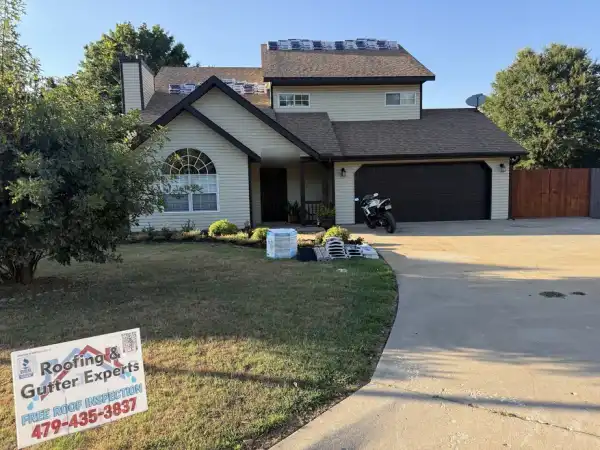
If you've never had a roof inspected after a storm, it's hard to know what to expect. Who climbs up? What are they looking for? What do you get at the end besides a handshake?
Roofing & Gutter Experts, based at 707 S 48th St in Springdale, handles storm damage in four stages: Inspect the Property, Document Visible Damage, Review the Findings, and Complete the Restoration. Here's what each stage looks like from your side of the driveway.
Stage one: Inspect the Property
The visit starts with a look at the whole property, from the ridge down to the gutters. The roof surface gets the most attention: every slope, the ridge, the valleys, the flashing and the vents. Wind and hail leave different signs. Hail tends to bruise and crack shingles and dent soft metal. Wind tends to lift, crease or pull shingles loose, usually along edges and ridges.
The inspection also covers the parts of the house that tell the story of the storm. Gutters and downspouts, fascia, soffit, siding and window screens all take hits, and dents on them help show which way the storm moved and how hard it hit. If you've noticed a water stain or a drip, mention it up front so the inspector can follow it to the source.
You don't need to climb up, and you can ask what's being looked at while it happens.
Stage two: Document Visible Damage
Findings that only exist in someone's memory don't help you later. So the second stage is about putting what was found into a record. Roofing & Gutter Experts takes photos of visible damage and, when it's appropriate to the project, measurements and project information.
The word visible matters. A responsible inspection documents what can actually be seen and shown, such as a dented vent, a cracked shingle or a creased tab. It doesn't guess at damage nobody can point to. That's good for you, because honest documentation holds up better when it's read by someone who wasn't there.
- Photos of damage found on the roof, gutters and downspouts, and other exterior surfaces
- Measurements and project information when they're needed for an estimate
- Notes on the condition of the roof overall, including areas that look fine
Stage three: Review the Findings
Next comes the part many homeowners care about most: being told what was found, in plain language. This is where you see the photos, hear what the inspector did and didn't find, and talk through your options. Those options might include repair, replacement, or no work at all if the roof came through the storm fine.
At Roofing & Gutter Experts, Emmanuel, the owner, runs estimates, insurance claims and final walk-throughs himself, so the person who explains the findings is the same person who stays with you through the project. Spanish is spoken, so the conversation can happen in the language you're most comfortable in.
If work is recommended, you can expect repair and replacement estimates, along with guidance on roofing materials and replacement options. If an insurance claim is involved, this is also the point to talk about the roofing scope and how the contractor can communicate with your adjuster when appropriate. The insurance carrier makes the call on coverage and payment, not the roofer.
Stage four: Complete the Restoration
If you decide to go ahead, and any insurance approval you're relying on is in place, the work is scheduled and carried out. That covers the roof repair or replacement, plus any gutters or other exterior pieces that were damaged in the same storm. The project ends with a walk-through, where you look over the finished work with the owner before it's called done.
Cleanup belongs in this stage as well. A roof job leaves nails, shingle scraps and debris around the property, and a good crew picks up after itself. It's fair to ask any contractor how they handle it.
Questions worth asking at any inspection
- What exactly did you find, and can I see the photos?
- Which damage is from this storm, and which is ordinary wear?
- What are my options, and what does each one involve?
- Who will be at the estimate, during the work and at the final walk-through?
- How will you communicate with my insurance company, if I make a claim?
A contractor who's comfortable answering those questions with photos in hand is a contractor worth hearing out. One who gets vague about them is giving you information too.
To see the full process, read the Storm Damage page on this site. To book a free roof inspection in Springdale, Fayetteville, Rogers, Bentonville, Bella Vista or Centerton, use the Contact page or call 479-435-3837. The phone line is open 24 hours.
Roofing & Gutter Experts, 479-435-3837
Call 479-435-3837More articles
How to Tell if Your Roof Has Hail Damage
Some hail damage shows from the driveway, but most of it doesn't, and that gap is the reason to look closer after a storm.
Class 4 Shingles: What the Rating Means
Class 4 is a real step up in impact resistance, and it is still not a promise that hail can't hurt your roof.