Working With Your Insurance Adjuster on a Roof Claim
A roof claim goes better when you know which decisions belong to the insurance company and which jobs belong to the contractor.
October 1, 2026 · 4 min read
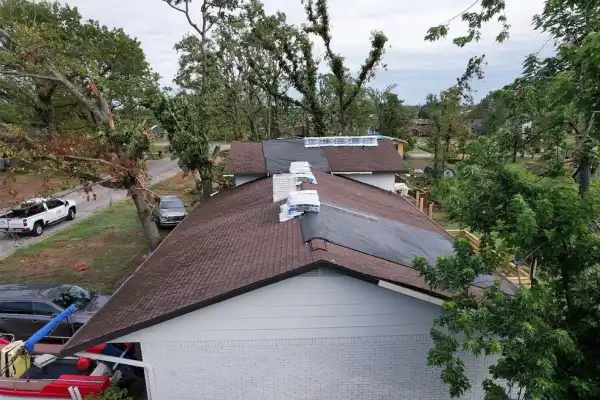
A roof claim involves at least three parties: you, your insurance company and a roofing contractor. Most of the confusion homeowners run into comes from not knowing who decides what. Once that's clear, the process gets a lot less stressful.
Who decides what
Your insurance carrier decides coverage and claim approval, and it decides what it will pay. That's true no matter how obvious the damage looks and no matter which roofer you call. A contractor can't approve a claim, promise an outcome or tell you what your policy will cover. Be careful with anyone who does. The best a roofer can do is show you what's on the roof and explain what the work would involve.
Your policy is the document that sets the terms. Read it, or call your agent and ask. Questions about your deductible, your coverage and your deadlines belong with the carrier, because the answers depend on your specific policy.
What your roofer does
The contractor's role is to look at the roof and tell you what's physically there. At Roofing & Gutter Experts, that role covers a short, specific list:
- Professional storm damage inspections
- Photos and documentation of visible damage
- Measurements and project information when appropriate
- Roof repair and replacement estimates
- Guidance on roofing materials and replacement options
- Communication about the roofing scope when needed
Notice what isn't on that list. The contractor doesn't decide whether the claim is covered. The contractor documents the roof, explains the work and completes the approved restoration.
Meeting the adjuster
The adjuster is the carrier's representative, and they'll review the damage for the insurance company. Many homeowners wonder whether their roofer can be there. Roofing & Gutter Experts can coordinate with your adjuster when appropriate, which means the person who inspected the roof can be available to walk through what was found and answer questions about the roofing scope.
That can help, because the adjuster and the contractor are looking at the same roof for different reasons. The contractor's photos and measurements give everyone the same facts to start from, so the conversation is about the roof instead of about whose memory is better.
Reviews from Northwest Arkansas homeowners describe the owner, Emmanuel, helping them through the insurance process from the first estimate to the final walk-through. He handles estimates and claims directly, and Spanish is spoken if that's easier for you.
Get your documentation in order
Before and after the adjuster visit, it helps to have your own file. You don't need anything fancy.
- Photos of the damage, including soft metals like vents and gutters
- The date of the storm and what you noticed afterward
- Your contractor's inspection photos, measurements and written estimate
- Notes from every phone call with your carrier, with names and dates
- A copy of your policy and any claim number you've been given
When the estimates don't match
It's common for a contractor's estimate and the insurance estimate to come out different. That's not automatically a sign that anyone is being dishonest. Estimates can differ for ordinary reasons: one may include damage the other missed, the two may measure the roof differently, they may assume different materials, or they may disagree on whether a section can be repaired or has to be replaced.
If yours differ, start by asking what's behind the gap. Compare the two line by line. Look at the measurements, the materials, and which parts of the roof, gutters or other exterior pieces each one covers. Your contractor can explain the roofing scope and the photos behind their numbers, and the carrier can explain how it reached its own figure.
Roofing & Gutter Experts answers this question on its Storm Damage page: it can explain its estimate and the roofing scope, and talk with the adjuster when appropriate. What the carrier finally approves is still the carrier's decision.
Stay calm and stay informed
A roof claim can feel urgent, especially if there's a leak or a tarp on the house. Even so, you're allowed to ask questions, request photos and take the time to understand an estimate before you sign anything. If something in the estimate isn't clear, ask the contractor to walk you through it line by line, and ask your carrier to do the same with theirs. Anyone pressing you to decide on the spot, or telling you what the carrier will pay before the carrier has said so, deserves a second look.
If a storm has damaged your roof, the Storm Damage page walks through how Roofing & Gutter Experts handles inspection, documentation, review and restoration. To start with a free roof inspection in Springdale, Fayetteville, Rogers, Bentonville, Bella Vista or Centerton, use the Contact page or call 479-435-3837. The line is open 24 hours.
Roofing & Gutter Experts, 479-435-3837
Call 479-435-3837More articles
How to Tell if Your Roof Has Hail Damage
Some hail damage shows from the driveway, but most of it doesn't, and that gap is the reason to look closer after a storm.
What Happens at a Free Roof Inspection After a Storm
Knowing the four stages ahead of time makes the visit easier and helps you ask better questions.